A car polisher buffer can improve exposed paint before PPF installation, but using the same machine on installed film creates risks that routine washing does not. You will learn which machine belongs to each job, how long fresh film needs to cure, how to test a PPF-safe polishing process, and what to ask before booking a local installer.
Key takeaways
- Polish and correct the clear coat before PPF installation.
- Wait for the installer’s cure period before washing or machine work.
- Use gentle hand polishing only when the film maker permits it.
- Let self-healing PPF recover with controlled warmth, not aggressive rubbing.
Which polisher belongs before PPF, and which one belongs after it?
Before PPF installation, use a polisher on the exposed painted clear coat. After installation, do not treat a machine as a routine PPF-care tool; wash the film gently instead.
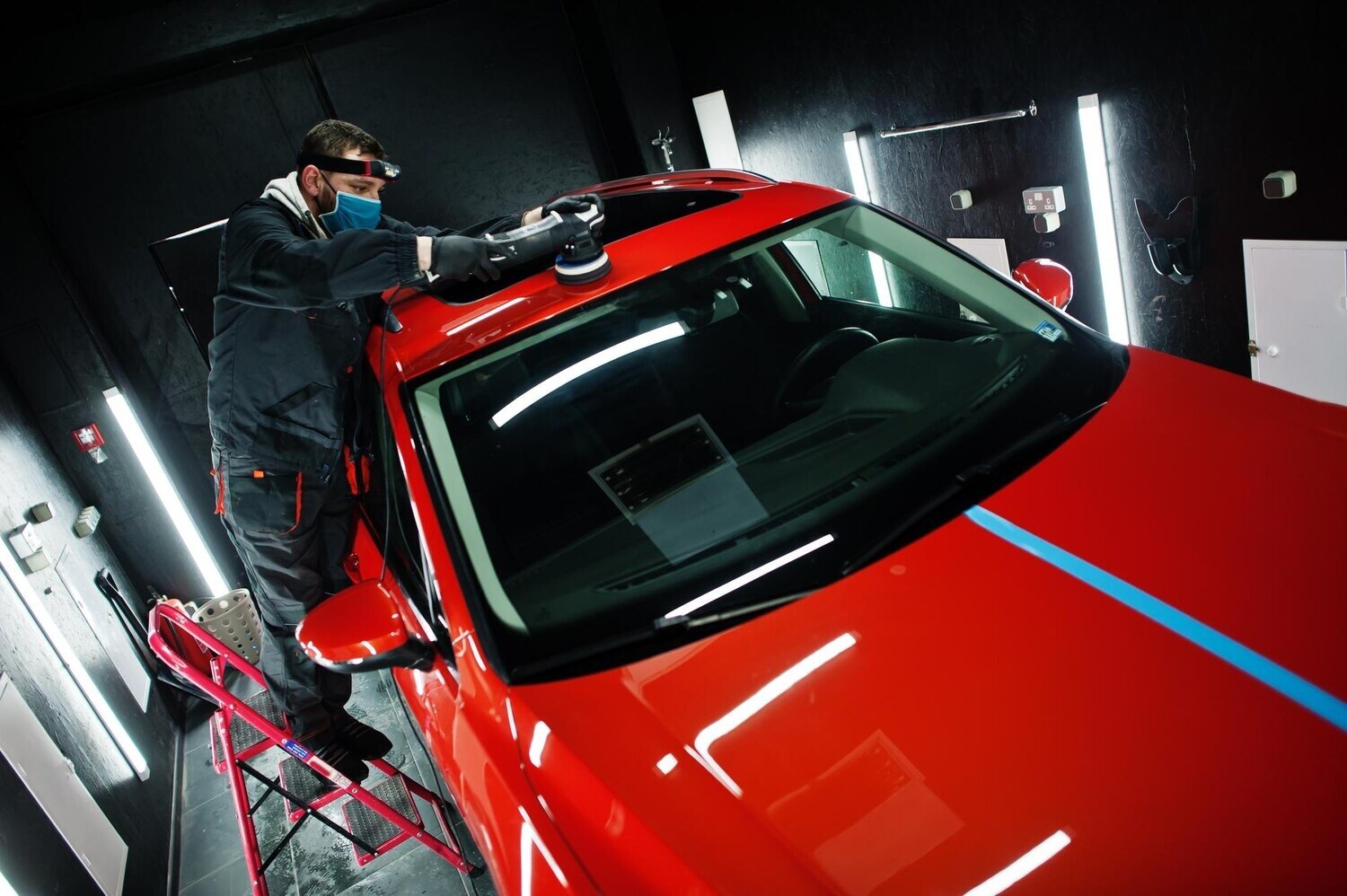
A car polisher buffer is a powered machine that spins or oscillates a pad with polish or compound.
| Machine | Movement and risk | Correct use |
|---|---|---|
| Rotary polisher | Spins on one fixed axis, removes material quickly and concentrates heat | Experienced correction on suitable clear coat before PPF |
| Dual-action polisher | Rotates and oscillates, spreading heat and reducing sharp burn marks | Safer paint correction before film installation |
| Orbital buffer | Uses gentler oscillation | Applying or removing products, not severe-defect correction |
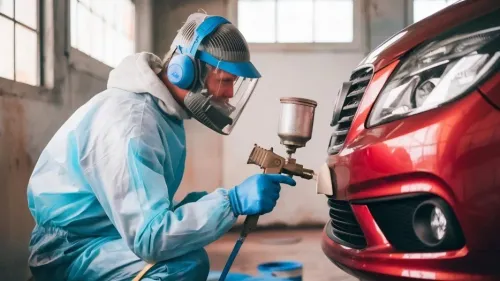
The phrase car polisher buffer Magarpatta can describe two different jobs: correcting clear coat before fitting, or attempting to polish installed PPF. Pre-installation correction can remove suitable light defects and improve the surface beneath the film. Do not polish through the film during installation.
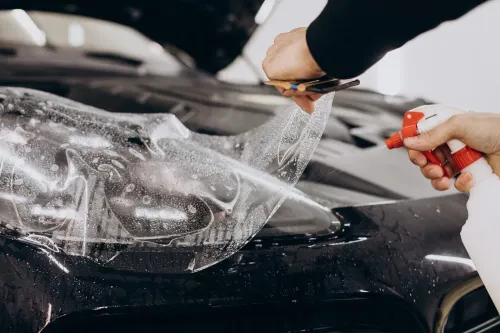
PPF is transparent polyurethane, commonly 6–8 mil, or about 150–200 microns including adhesive and topcoat. Friction, heat and pad pressure can stretch it, mark the topcoat, create gloss variation or weaken an edge. That makes car polisher buffer Magarpatta PPF work more hazardous than paint correction.
A rotary machine is not a default cure for dullness, stains or scratches on PPF.
Ask the operator whether the work concerns painted clear coat or installed film before selecting the machine, pad or compound.
How long should fresh PPF cure before washing or machine work?
Wait at least 24–48 hours before washing a newly wrapped vehicle or using machine equipment, then follow the installer’s film-specific instructions. Cool temperatures, high humidity and poor ventilation slow adhesive curing, so the stated period may be longer.
Ask for the exact waiting time in writing instead of accepting a promise that the film is ready immediately.
1. Before installation, have the technician inspect the paint, remove tar and bonded contamination, and decide whether exposed clear coat needs correction. A clean, properly prepared surface reduces contamination beneath the film.
2. During the first few days, small moisture pockets can disappear as the adhesive cures. Do not press a bubble with your fingernail, lift an edge, rub a trapped speck or aim a heat gun at the panel without training. These actions can leave permanent marks or push contamination under the film.
3. Keep the vehicle away from aggressive washing, machine polishing and edge stress throughout the stated curing period. This applies to Magarpatta PPF work regardless of whether the film covers one panel or the entire vehicle.
4. After curing, wash with automotive shampoo, clean microfiber towels and gentle drying. If you use a pressure washer, choose a broad spray pattern, keep the nozzle away from seams and edges, and never direct high-pressure water beneath a lifted corner. Water can lift an edge even when the film itself is undamaged.
What is the safest way to polish PPF when the film maker permits it?
Machine-polish PPF only after the film maker permits it, identifies the installed film model, and a test spot shows that the process is safe. Start by inspecting for lifting, cuts, punctures, creases, cloudy areas and adhesive failure. Do not machine-polish a defective section.
Use this order:
- Choose a small, inconspicuous area for testing.
- Fit a clean, soft finishing pad and use a mild, non-aggressive product approved for that film.
- Set low machine speed, apply minimal pressure, and keep the pad moving.
- Make short, low-heat passes. Stop immediately if the panel becomes hot.
- Stay away from exposed edges, seams, wrapped corners and lifting areas.
- Wipe residue with a clean, soft microfiber towel; do not repeatedly rub the film dry.
Car polisher buffer Magarpatta services can involve exposed clear coat or installed film, but the products are not interchangeable.
| Option | Safer approach | What can go wrong |
|---|---|---|
| PPF maintenance | Hand wash, prompt rinsing and gentle drying | Dried bird droppings, sap or minerals can etch the topcoat |
| Approved machine work | Mild product, soft pad, low speed and test spot | Heat, pressure or friction can stretch, haze or lift PPF |
| Aggressive correction | Do not use first | Cutting compound, solvents or fillers can stain, soften or alter TPU gloss |
Avoid a rotary buffer, abrasive compound, harsh degreaser or unapproved filler polish. If the operator cannot name the film, pad, product and test procedure, choose hand cleaning or obtain the technical data sheet.
How should you care for self-healing PPF after a scratch?
Clean the area first with pH-balanced automotive shampoo, then inspect the defect under strong, even light. A heat-activated topcoat can reduce light wash marks and superficial scratches, but self healing ppf magarpatta does not replace missing film.
If the film manufacturer permits it, pour or rinse warm, not scalding, water over a light surface mark and let the panel cool naturally. Do not hold a heat gun close to PPF: concentrated heat can distort polyurethane, damage the topcoat, soften adhesive or worsen an edge.
Treat these defects as replacement issues, not polishing jobs:
- Deep cut, puncture or stone-impact breach
- Crease or severe discolouration
- Delamination, lifting or adhesive failure
- Any area where film material is missing
Heat cannot rebuild a cut film. A polisher cannot restore it either; polishing through a damaged topcoat can make the defect more visible and spread heat across a weak area. Arrange inspection and usually removal and replacement of the affected piece.
PPF remains vulnerable to bird droppings, insect residue, tree sap, fuel and hard-water minerals. Rinse contamination promptly and wipe gently with uncontaminated microfiber. Routine care needs clean water, automotive shampoo and careful drying—not a car polisher buffer. Aggressive correction creates more risk than benefit.
What should you ask a Magarpatta PPF installer before booking?
Before booking, ask whether the proposed car polisher buffer Magarpatta work is for exposed clear coat or installed PPF. Those are different operations, and a machine can generate heat, stretch film, mark its topcoat or weaken an edge.
| Work proposed | Suitable purpose | Main risk |
|---|---|---|
| Rotary polisher | Heavy correction on exposed paint | Concentrated heat and burn marks |
| Dual-action polisher | Controlled correction before installation | Incorrect pad or pressure can still damage clear coat |
| Machine polishing on installed PPF | Only with film-maker approval | Haze, gloss variation, stretching or edge lifting |
For a PPF installation near me, ask for these details in writing:
- Exact film model, stated thickness and warranty terms
- Panels covered, edge-wrapping policy and post-installation washing instructions
- Plotter-cut or hand-trimmed pattern; plotter cutting reduces knife contact, while hand-trimming allows custom coverage but creates cutting risk on the vehicle
- Paint decontamination and correction planned before application
- Approved products and machine procedure for any post-installation polishing
- Curing schedule, with at least 24–48 hours before washing unless the film-specific instructions require longer
Inspect sample vehicles for aligned panels, clean edges, no trapped debris and no lifting around curves. Ask how a flawed piece will be removed and replaced without harming paint.
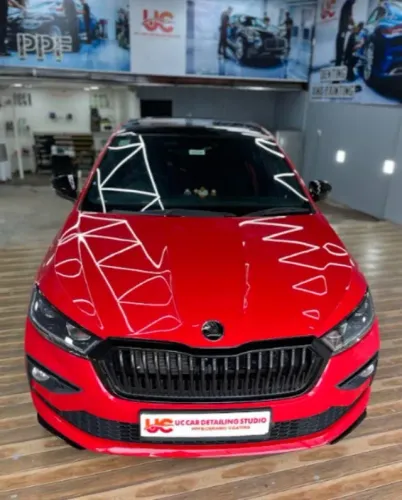
UC CAR DETAILING STUDIO - 08048033687 is one Mundhwa option near Amanora Park Town for discussing combined correction, Magarpatta PPF installation and later care. Have the team identify the film before authorising machine work.
Frequently asked questions
Which polisher belongs before PPF installation?
Use a suitable machine polisher on the exposed painted clear coat before installation. After PPF is fitted, treat the film gently rather than using a buffer as routine care.
How long should fresh PPF cure before washing or machine work?
Follow the film maker’s and installer’s written cure instructions. Avoid washing or machine work until that period has ended, because early movement or pressure can disturb the film and its edges.
What is the safest way to polish PPF?
Polish PPF only when the film maker permits it. Choose a compatible, non-abrasive product, use light pressure and low heat, and test an inconspicuous area first.
How should you care for self-healing PPF after a scratch?
Wash the area gently, then use the film maker’s approved heat-recovery method. Do not attack the mark with a cutting compound, aggressive pad or high-temperature machine.
What should you ask a Magarpatta PPF installer before booking?
Ask which film is being installed, whether it supports polishing and self-healing, the required cure time, edge-finishing method, warranty terms and aftercare products.
Keywords